
Woodwork
Our Wood Painting service includes preparing all surfaces for interior and exterior painting,priming,undercoating and varnishing. Our services include the staining and painting of your exterior wooden and metal structures which includes fences, sheds and garage doors as well as iron railings and metal gates.
Wood Paint Finishes
Behind every new shade and paint-effect trend is a paint finish. Figuring out which paint to use, and where, can be difficult. We know this because we’re often asked for advice by our customers. On one hand, paint finishes of all kinds have become versatile with the introduction of better quality water-based paints, but if you’re trying to create a specific effect, you do need to know the differences between the main finishes, so here is a introduction to gloss, satinwood and eggshell finish paints. Gloss Gloss creates a high sheen finish that lasts. It is more durable than other paint finishes and for this reason it’s the most popular choice for high wear areas like doors, where gloss wood paints are the natural choice. Gloss paint is also commonly used in kitchens and bathrooms where surfaces need to be able to withstand more wear and tear. If you are looking for an exterior paint, gloss should be your first choice because of its durability. Satinwood A mid-sheen finish is best achieved with satinwood paint, which is used for interior painting for durability. When it comes to painting windowsills and skirting boards, satinwood is becoming an increasingly popular choice because it tends to retain a bright white colour longer than gloss paints, though water-based glosses now perform well in this area. You can more often than not skip the undercoat by using satin gloss too. Eggshell More matte than gloss or satinwood, subtler eggshell paint is another top choice for interiors. If you want to create a shabby chic or period-style finish, eggshell may be your best paint partner. It’s great on plasterboard, which makes it very compatible with modern homes and it can be used on wood and metal too. It’s also a good base for layering paint effects.

Are you looking for a reliable, trustworthy, local painter and decorator?
Woodwork Painting Sunderland
For woodwork painting in Sunderland, I start with the timber itself. After 20+ years working across Sunderland and the wider North East, I know good results come from proper prep. That means checking for defects, repairing where needed, sanding back, filling, and clearing off every bit of dust before any paint goes on. From there, I use the right primer, undercoat, and topcoat for the job. That could be skirting, architraves and doors inside, or exterior timber that needs to stand up to weather in Tyne & Wear. I choose finishes for adhesion, flexibility, moisture resistance, and how well they wear over time. Each job is planned around drying times, the condition of the woodwork, and how exposed it is. Below, I’ve covered the process, the products I use, likely timings, and the areas I work in.
Takeaways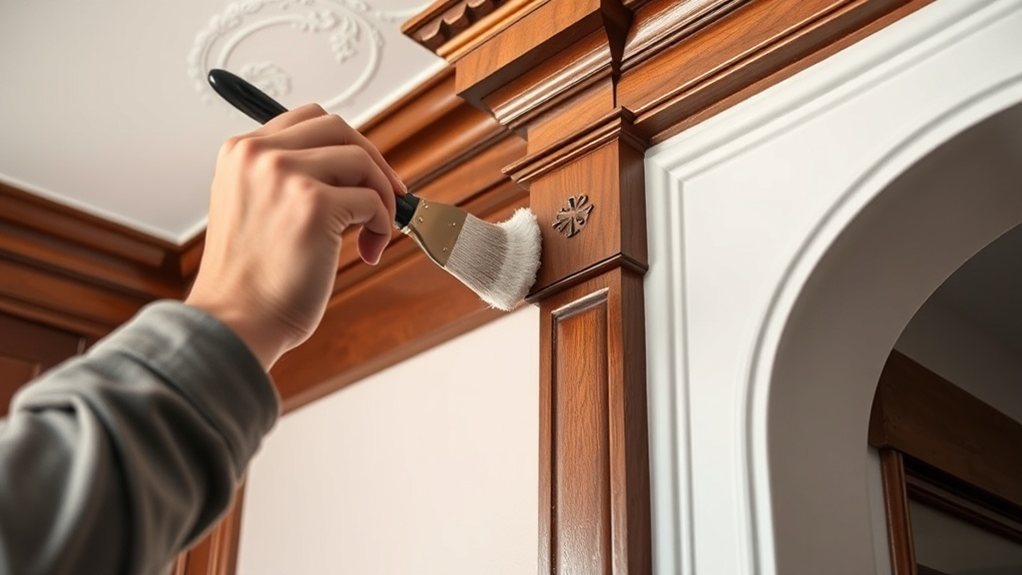
Woodwork painting in Sunderland usually means all the timber inside and out. That includes skirting boards, doors, frames, architraves, stairs, fascia, soffits, and cladding. I’ve been on the tools for over 20 years, and good woodwork always starts with proper prep. Before any paint goes on, the timber needs checking and sorting. I clean it down, sand it properly, fill any knocks or cracks, and look for damp, flaking paint, rot, or other damage. If the prep is poor, the finish will not last. I use the right primer, undercoat, and topcoat for the job. Inside, that might be gloss, eggshell, or satinwood, depending on the finish you want. Outside, the paint needs to cope with rain, moisture, and day-to-day wear. In Sunderland, coastal air can be hard on outside woodwork. Salt, damp, and rough weather can shorten the life of a paint finish if the wrong system is used. On exposed properties, breathable and weather-resistant coatings are often the better choice. A proper quote should be clear and easy to follow. It should list what surfaces are being painted, what prep is included, the materials, number of coats, and how long the work should take. Most woodwork painting jobs take between one and three days.
What Our Woodwork Painting Service Includes
If your woodwork needs freshening up or there are a few areas past their best, I handle the full prep and painting from start to finish. That covers interior and exterior timber, including skirting boards, doors, frames, stair parts, fascia, soffits, cladding and decorative joinery. The spec is matched to where the timber is, what condition it is in, and how much wear it gets. I start by checking the surface properly and sorting minor defects before any paint goes on. If needed, I use stain-blocking products, then the right primer and undercoat for the job. Topcoats are chosen for good adhesion, flexibility and moisture resistance, so the finish lasts. You can go for colours that suit older features or a more modern scheme. Low-odour, eco friendly paints are available if that matters to you. The aim is simple: even coverage, tidy lines and a finish that stands up to day-to-day use.
How We Prepare Surfaces for Woodwork Painting
Start with clean, sound timber. Prep decides how well the paint sticks and how long it lasts. Every section needs to be dry and free from grease, dust, loose fibres, and any failed paint before work starts. I check the woodwork properly first. That means looking for splits, dents, movement, water marks, and old paint that is lifting or breaking down. Any loose areas are scraped back, shiny patches are sanded, and rough edges are feathered in so the surface sits even. Small gaps, joints, and minor defects are filled where needed to keep everything neat and level. Then the timber is sanded with the grain to smooth it out without rounding off mouldings, skirting boards, or architraves. Once that is done, all dust is cleared away and the surface is checked again. It needs to be clean, flat, and ready for undercoat. That is what gives you a tidy finish that lasts.
Materials and Products We Use for Woodwork Painting
Once the woodwork is properly prepped, the choice of products makes a big difference. The right primer, undercoat and topcoat help with adhesion, flow and how long the finish lasts. I match them to the type of timber, how dry it is, and where it’s being used. Some woods need a primer that seals the grain properly. Tannin-rich timber often needs a stain-blocking product to stop marks coming through. Fillers need to cure hard but still cope with a bit of movement, especially on joints and edges. For the finish coats, I use paints that give good opacity, an even sheen and a washable surface. That might be gloss, eggshell or satinwood, depending on the job and the look you want. Product choice is never guesswork. It’s based on how the surface behaves, how sharp the edges need to stay, and how the paint dries.
- Acrylic primers for quick drying and low odour
- Alkyd or hybrid undercoat for levelling and build
- Flexible fillers for joints, dents and minor defects
- Waterborne or solvent-based finishes for hard-wearing results
That gives you better coverage, cleaner lines and fewer problems later on. It also helps the paint last longer before it needs doing again.
Common Woodwork Painting Projects We Handle
The job itself makes a big difference to how the finish is applied and how well it holds up. Detailed mouldings need a steady hand. High-traffic areas need tougher products. Exterior timber needs the right prep and paint to cope with damp, sun and movement through the seasons. We regularly paint interior woodwork such as skirting boards and architraves. We also cover door frames, window casings and stair spindles where clean lines and even coverage matter. On the outside, we deal with mouldings and other timber that take the weather. Cabinets and furniture need a different approach again. The surface has to be level, properly keyed and finished with the right undercoat and topcoat for a durable result. We keep the process straightforward. First, we check the surface properly. Then we fill, sand, prime and apply controlled topcoats. Whether it’s one room or several bits of joinery throughout the house, each area is treated to suit its shape, wear and exposure.
How Long Does Woodwork Painting Typically Take?
Woodwork painting can take anything from a day to three days in most homes. It depends on what you’re having painted, what shape it’s in, and the finish you want. Simple skirting boards and architraves are usually quicker than panelled doors, stairs or fitted cupboards. You’ll normally need the first day for preparation. That means cleaning down, sanding, filling, caulking where needed, and applying knotting or undercoat if the timber needs it. If the old paint is peeling, stained or glossy, that adds more time. Drying time matters as well. You can’t rush undercoat and top coats, especially in colder weather or if you’re using oil-based products. Between coats, the woodwork often needs a light denib to keep the finish smooth. Access and masking can slow things down. Occupied homes take longer because furniture has to be moved, dust sheets put down, and rooms kept usable. If you’ve got detailed mouldings, lots of door frames or several rooms, expect the job to take longer.
What a Woodwork Painting Quote Includes and How Pricing Works
A woodwork painting quote should show exactly what’s included before any work starts. I price it around the amount of woodwork, the condition it’s in, the prep needed, the materials, and how easy it is to get at. That way, you can see what you’re paying for and compare quotes properly. It should list the items being painted, such as skirting boards, architraves, doors, frames, bannisters or window boards. It should also cover measurements, the paint system, sanding, filling, caulking, masking, undercoat and top coats. If old paint is loose or failing, the quote should say whether it needs stabilising or stripping back. The main things that affect cost are the amount of detailed trim, any damage, how many coats are needed, and the type of finish. Gloss, eggshell and satinwood all behave differently, and drying times matter. If rooms are occupied, the job can take longer as everything has to be kept clean and workable between visits. Access also makes a difference. If furniture needs moving, or the work is on stairs or tight landings, labour time goes up. It’s also worth checking if the quote includes minor repairs, cleaning between coats, and taking away any debris.
Why a Professional Approach Matters for Woodwork Painting
Once you’ve seen what’s in the quote, the next thing is how the job will be done. That matters with woodwork because the finish depends on proper prep and doing things in the right order. Miss a stage, and the paint won’t sit right or last as it should. The timber needs cleaning and degreasing first. Then any holes or knocks are filled, the surface is sanded properly, and the right undercoat or primer is used to suit the wood and whatever is already on it. If that prep is rushed, you’ll see defects through the top coat. A proper job gives you an even build of paint, neat cutting-in, and a smoother finish on skirting boards, doors, architraves and bannisters. Things like moisture, knots, tannin bleed and old gloss all need checking before any paint goes on. Drying times need to be left alone, and dust needs keeping to a minimum. That’s what makes the difference between a finish that just looks alright on day one and one that stays sound. The woodwork looks cleaner, the finish is more even, and it stands up better to daily wear.
Areas We Cover Across Sunderland and the North East
Whether you’re in Sunderland centre or further out across the North East, woodwork painting needs proper planning. The type of property matters. So does access, the condition of the timber, and how the job is scheduled. Older homes and newer builds need different prep and different coating systems. I check what’s already on the surface, what shape the timber is in, and what it needs before any paint goes on. That helps the finish last and keeps the job right from the start.
- Internal trim, doors, skirting boards, architraves, and stair parts
- External fascias, soffits, window frames, gates, and outbuildings
- Checks for moisture, salt exposure, and failed or flaking coatings
- Access planning for terraces, semis, flats, and commercial premises
Across the wider area, every job is looked at properly before work starts. That includes checking the substrate, spotting repairs, planning masking and dust sheets, and allowing for drying times. You get a consistent process and a practical approach. The finish is matched to the timber, the property, and the local conditions all year round.
Sunderland, Washington, Houghton-le-Spring, Seaham, South Shields, Gateshead
Across Sunderland, Washington, Houghton-le-Spring, Seaham, South Shields and Gateshead, woodwork painting needs to suit the property, the condition of the timber and how exposed it is. A house in Sunderland often needs a different approach to a coastal terrace in Seaham or an older home in South Shields. Before any paint goes on, I’d want to check for resin bleed, failed coatings, moisture getting in and the spots that take the most wear. You need someone who understands how timber moves, how sash windows are built and how older trim profiles should be treated. After more than 20 years on the tools around this area, I know the prep matters just as much as the finish. If the groundwork is poor, the topcoat will not last. Most homeowners now want a durable finish with a sensible sheen and colour that works with the brick, render or stone. For woodwork, that usually means satinwood, eggshell or gloss, depending on where it is and how much use it gets. On exposed timber, I’d also look at breathable systems where needed, rather than just putting on the hardest finish and hoping for the best. For restoration work, proper preparation is key. That means careful sanding, filling, repairs where needed, the right undercoat and a topcoat that suits the timber and the building. Even on community art schemes, the finish only holds up if the surfaces are prepared properly and the products are right for the job.
Chester-le-Street, Newcastle upon Tyne, Durham, Jarrow, Hebburn and Peterlee
From Chester-le-Street to Newcastle upon Tyne, Durham, Jarrow, Hebburn and Peterlee, I specify woodwork painting to suit the building, the condition of the timber and how exposed it is. After 20+ years on the tools, I know there is no point using the same system on every job. I check for moisture, failing paint, resin bleed and wear before I choose the primer, undercoat and finish.
| Area | What I pay attention to |
|---|---|
| Chester-le-Street | General wear, weather exposure and the age of the joinery |
| Newcastle upon Tyne | Heavy use areas, older timber and mixed previous coatings |
| Durham | Traditional joinery, breathable paint systems and clean prep |
| Jarrow | Durable finishes for busy homes and exposed positions |
| Hebburn and Peterlee | Colour choice, tidy coverage and practical long-lasting finishes |
On older joinery, I usually use breathable systems so the timber can move and dry properly. Where there is a bit of movement, flexible acrylic products are often the better choice. On skirting boards, architraves and other high-contact areas, a harder gloss, eggshell or satinwood finish can make more sense. If the property is in an exposed spot, I focus on adhesion, edge sealing and stain blocking. If it is more sheltered, I can spend more time getting the sheen level right, improving opacity and filling the grain for a neater finish that lasts.
Across SR, NE, DH and TS postcodes, I paint woodwork to suit the house, the condition of the timber and how exposed it is. I do not use the same system on every job. What works in one street will not always last in another. In coastal parts of SR and TS, timber takes more of a beating from salt, wind and repeated wetting. That usually means higher-build primers and topcoats that cope better with moisture. In more sheltered parts of NE and DH, the prep still matters most, but the paint system can be adjusted to suit the lower exposure. I start by checking joints, testing old paint and dealing with any resinous knots properly. Then I choose primers, undercoat and finish coats that are compatible with the timber and the existing surface. I also allow for deep mouldings, thirsty end grain and natural movement in the wood. That helps keep joinery sound and the finish stuck fast. It also gives you a result that suits local weather, rather than just a colour picked from a chart.
Frequently Asked Questions About Woodwork Painting
Paint on timber only lasts if the surface is right to start with. The job changes with the type of wood, how exposed it is, and what’s already on there. Before I start, I check moisture levels, test what the old coating is doing, and look for resin bleed, rot, loose filler or failed caulk. A lot of homeowners ask if the old paint can stay. Sometimes it can, if it’s sound and still bonded well. If it’s flaking, soft, or failing around joints and end grain, it needs stripping back and sorting properly. Primer matters as well. Bare timber, filled areas and repairs often need different treatment before undercoat goes on. Get that wrong and the topcoat will not last, whether you’re using gloss, eggshell or satinwood. If you’re wondering whether it’s time to repaint, have a close look. Outside, check for chalking, cracking, exposed end grain and joints opening up. Inside, I look for wear on skirting boards and architraves, plus grease, steam and general knocks. Good woodwork painting is mostly in the prep. Clean it, de-grease it, sand it to a proper key, spot-prime defects, then use a compatible undercoat and topcoat. After that, simple upkeep helps: wipe surfaces down now and then, air damp rooms out, and deal with leaks or failed sealant before they cause trouble.
Frequently Asked Questions
Can Painted Woodwork Help Improve Indoor Air Quality?
Yes, painted woodwork can help improve indoor air quality if you choose low-VOC or zero-VOC coatings. You’ll create sealed, smooth painted surfaces that trap fewer particles, reduce moisture absorption, and limit mould growth. That means fewer indoor pollutants can accumulate on porous timber. You should also guarantee proper surface preparation and curing, because poorly applied finishes may off-gas. With the right products, you’ll support a cleaner, more controlled indoor environment overall.
Is Woodwork Painting Suitable for Homes With Pets or Children?
Yes, woodwork painting can be suitable for homes with pets or children if you choose low-VOC, hard-wearing coatings and apply proper safety measures. You’ll want finishes with high scrub resistance and fast curing times to reduce contact risks. Address durability concerns by selecting products designed for impact, stains, and repeated cleaning. You should also guarantee full ventilation, controlled drying conditions, and restricted access until surfaces have completely cured properly.
Can Painted Woodwork Affect a Property’s Resale Appeal?
Yes—painted woodwork can improve your property’s resale appeal, and the theory holds true when execution aligns with buyer preferences. You’ll typically see better resale value if finishes look clean, durable, and professionally applied. Neutral colours, consistent sheen, and low-defect surfaces signal maintenance quality. However, poor preparation, visible brush marks, or bold colours can reduce appeal. You should treat painted woodwork as a presentation factor that influences perceived condition and marketability.
Are There Colour Trends for Woodwork in Sunderland Homes?
Yes, you’ll notice clear colour trends for woodwork in Sunderland homes. You’re likely to see modern palettes such as soft greys, off-whites, muted greens, and deep blues, selected for versatility and light reflectance. You’ll also find historical influences shaping choices in period properties, where heritage creams, sage tones, and darker trim remain consistent. If you’re updating woodwork, you should match colour selection to architectural style, lighting conditions, and finish durability.
Does Painted Woodwork Require Different Care in Coastal Areas?
Yes—salt-laden air and the theory that moisture migrates through microscopic paint pores are both real, so you’ll need stricter maintenance in coastal areas. You should inspect joints, end grain, and sills more often because coastal humidity accelerates swelling, blistering, and fungal risk. Wash deposits with fresh water, keep surfaces ventilated, and repair coating breaks quickly. Using marine-grade primers and flexible topcoats improves paint durability and extends repainting intervals considerably.